
What Monitoring Agents do
A live operating view — cleaned, normalized, and ready to act on.
Monitoring Agents create a live operating view of your business. They ingest project records, stage histories, finance milestones, system activity, and surrounding communications, then clean and normalize that data before it is used for analysis.
This matters because inconsistent naming, missing fields, cancelled projects, test records, or impossible durations can easily create false alarms. Frontier filters those out before the agent makes a judgment.
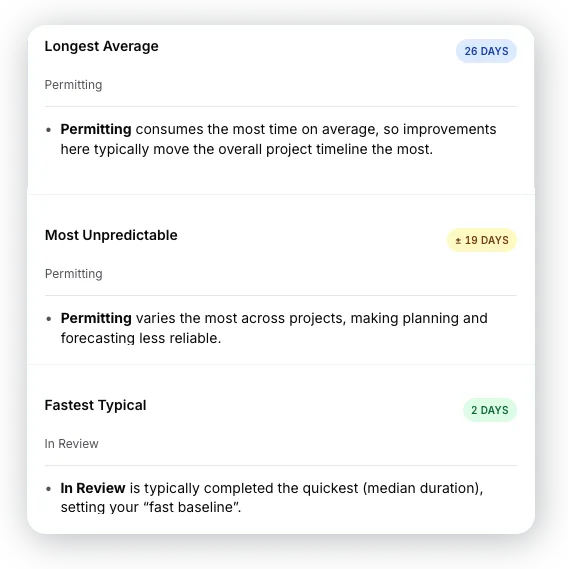
Once the data is clean, the monitoring layer scans every active work item and compares it against the patterns learned from your own history. A project that has been in permitting for 12 days may be normal for one finance partner and abnormal for another. Frontier learns those differences and turns them into risk signals your team can act on.
Four questions answered before the weekly meeting.
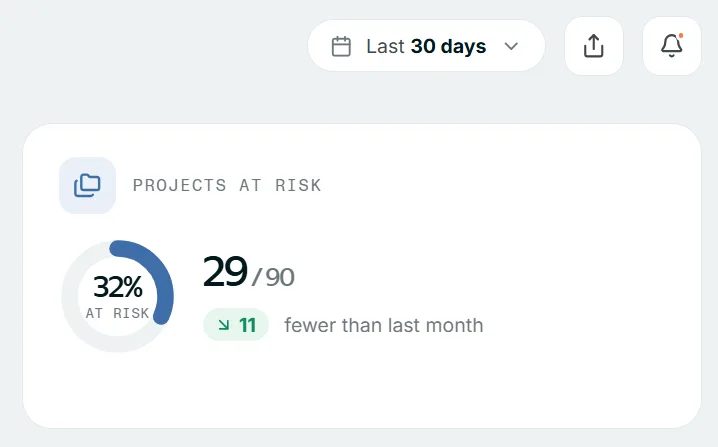
For a CEO, COO, or head of operations, the Monitoring Agents answer the questions that used to require hours of status-gathering. Instead of waiting for a weekly status meeting or discovering a problem after an SLA is missed, leadership gets a prioritized view of the work that deserves attention now.
Where is work slowing down right now?
Which delays are normal, and which ones are unusual for our business?
Which stalled items are most likely to hit revenue, cash, or customer commitments?
Where are the repeatable bottlenecks across teams, stages, or partners?
How it works
From raw data to a risk signal your team can act on.
Establish a baseline
Frontier first establishes a baseline for what “normal” looks like in your operation — calibrated per stage, job type, finance partner, milestone schedule, owner, and historical duration.
Continuously scan active work
Every active work item is checked against that baseline. Each item is marked healthy, at risk, or severely off track. Nothing slips through a weekly review cycle.
Catch early warning signs
The system also scans work that still looks healthy on the surface, looking for early signs that historically preceded delays: missing updates, unusual inactivity, repeated handoffs, finance milestone gaps, or quiet communication threads.
Apply tiered reasoning
Fast numeric detection runs first, flagging clear drift quickly. Deeper reasoning is applied where it adds value — not blindly everywhere. Strong analysis is reserved for the items where the stakes are highest.
Four dimensions of execution risk, watched continuously.
Stage movement
How long each item has spent in its current stage compared with similar historical work — calibrated per partner, job type, and team.
Milestone risk
Whether delay in the current step could push back inflows, approvals, installations, payments, or other key business events.
Communication gaps
Whether a project has gone quiet, has repeated follow-ups, or contains signs of blockers in email or notes.
Portfolio patterns
Whether a specific stage, team, partner, or work type is becoming a recurring source of delay across multiple items.
Find the work at risk.
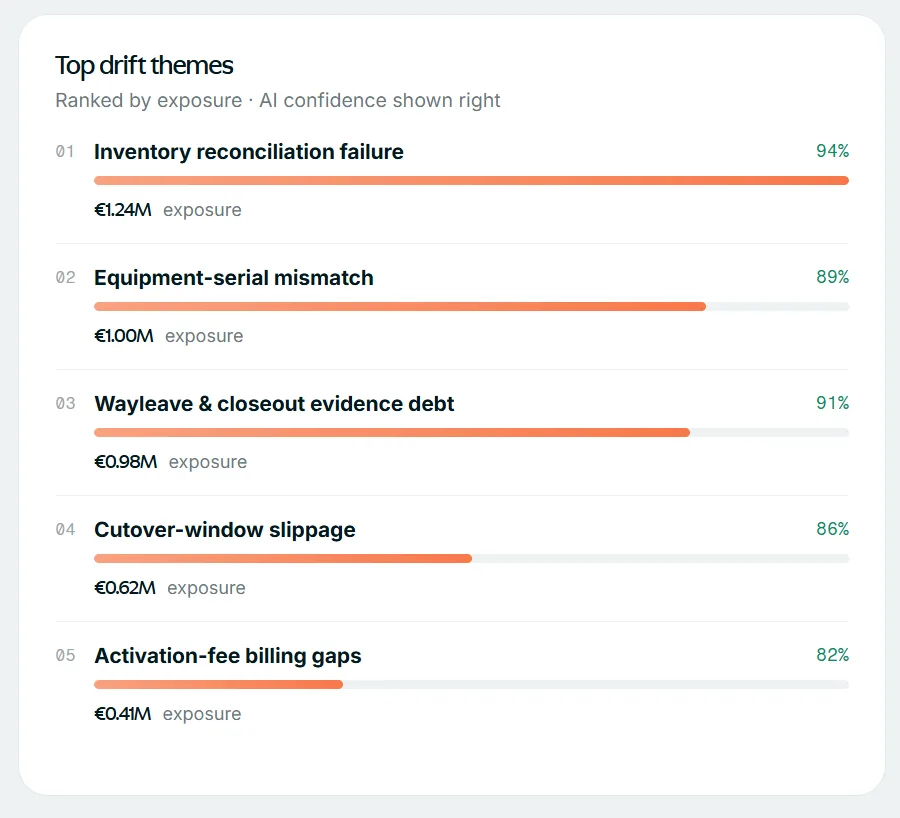
See which projects, customers, approvals, or milestones need attention before they become missed targets.
Book a demo