
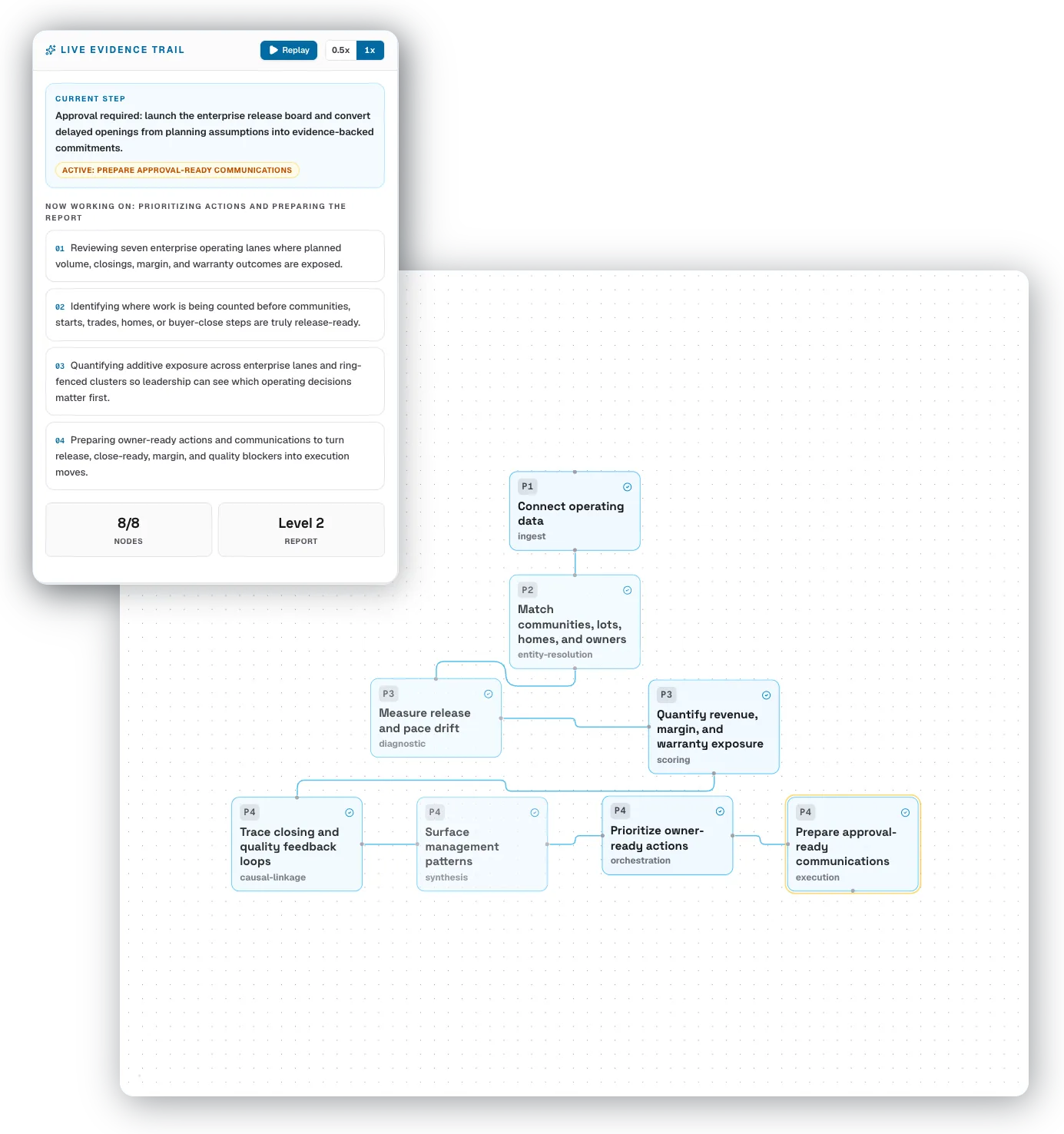
What Reasoning Agents do
Not every delay is the same problem.
Reasoning Agents investigate the cause behind stalled or risky work. A project might be stuck because a permit is waiting on a jurisdiction, because finance approval is incomplete, because the customer has not responded, because a design change created rework, or because ownership is unclear.
Frontier pulls together the relevant evidence and explains the likely root cause, contributing factors, confidence level, and recommended path forward.
Four specialist agents
Root cause agent
Diagnoses why a project is stuck — permit waiting, finance incomplete, customer delay, rework, or unclear ownership.
Action items agent
Turns each diagnosis into specific, prioritized recommendations your team can act on immediately.
Cashflow tagger
Identifies which actions protect or unlock cash, tying operational decisions directly to financial outcomes.
Executive summary agent
Translates the full analysis into priority, owner, and urgency — without requiring the executive to read every raw record.
Manage with facts, not status updates.
Instead of asking five people for status updates, executives can see the operational facts, the likely cause, and the next decision required — with the evidence to back it up.
What is actually causing the delay?
Is this a one-off issue or part of a broader operating pattern?
What is the financial or customer impact if nothing changes?
Who should own the next step?
What evidence supports the recommendation?
How it works
Each agent sees only what it needs.
Frontier gives each reasoning agent only the context it needs to do its job. The root cause agent may need the full project history, notes, emails, and finance milestones. The executive summary agent does not need to re-read every raw record; it needs the conclusions, financial context, and recommended path forward.
This makes the analysis sharper and reduces the chance that the model gets distracted or invents explanations. The system also uses evidence from communications, not just structured fields. If a customer emailed twice last week saying they were blocked on a permit, that becomes part of the diagnosis rather than staying buried in an inbox.
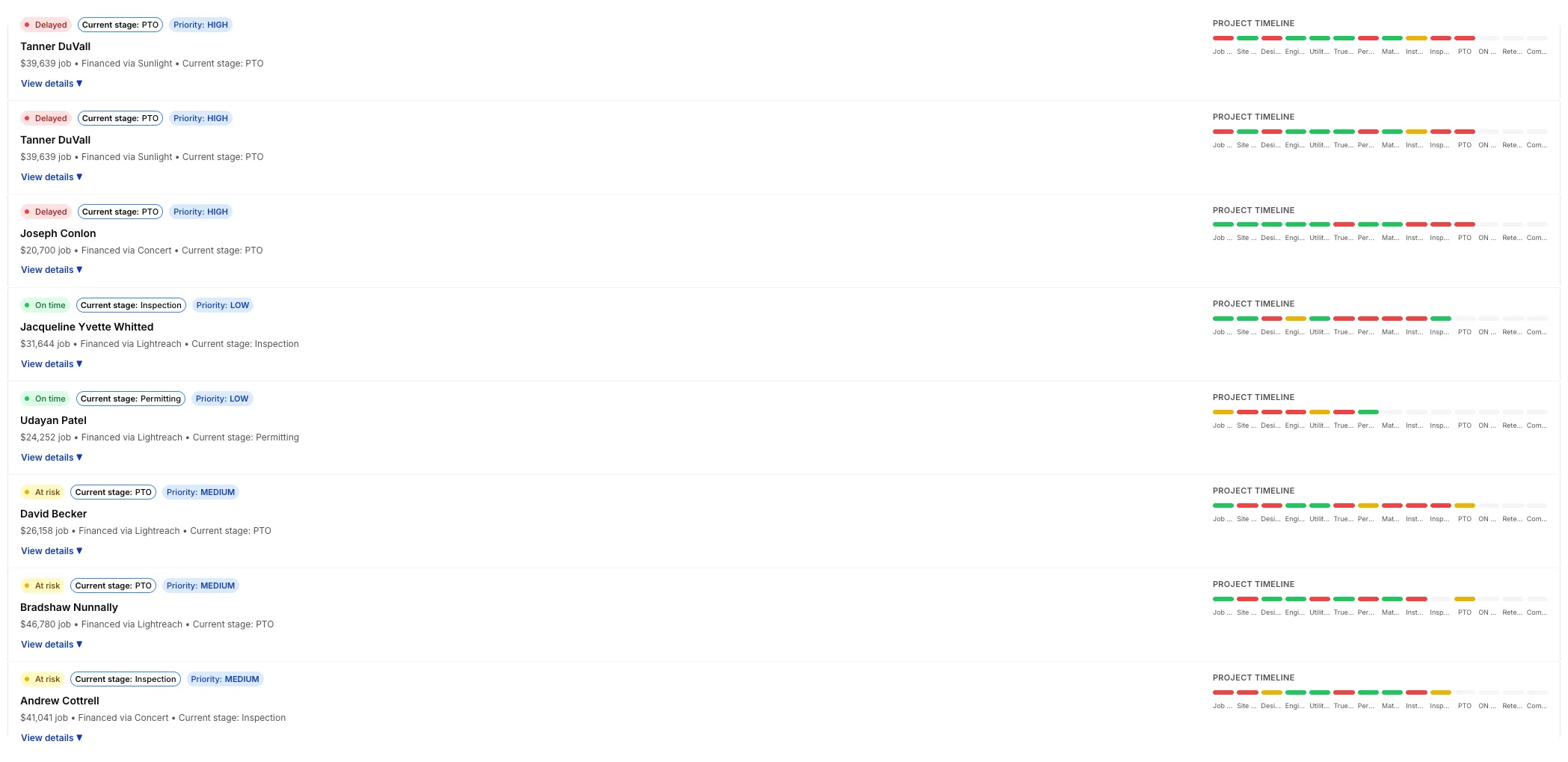
Five steps from flag to recommended action.
Frontier identifies the risk
A work item is moving slower than expected, has gone quiet, or is showing a pattern that usually precedes delay.
Frontier reconstructs the timeline
The agent reviews stage history, notes, financial milestones, emails, owner activity, and relevant records.
Frontier explains the likely cause
The system separates the symptom from the blocker: missing approval, unclear ownership, customer delay, partner dependency, documentation gap, or process bottleneck.
Frontier connects the issue to impact
The agent estimates whether the delay affects revenue timing, cash inflow, SLA performance, customer experience, or team workload.
Frontier prepares the next action
The diagnosis is handed to the Action Agents so the system can recommend or execute the best next step.
Built for executive confidence
Every recommendation shows the evidence behind it.
Frontier does not provide a vague AI summary. It shows the records, communications, timestamps, and operating signals that led to the conclusion — checked for structure, hallucination risk, actionability, and financial soundness before being shown.
Work item
Solar Installation — Permit Stage — Day 18
Evidence
Diagnosis
Likely blocker: incomplete permit documentation
Confidence
High
Recommended next step
Assign owner and send document request today
See the reason behind the risk.
Turn stalled work into a clear diagnosis, business impact, and next step.
Book a demo